Apple's Ecosystem Lock-In Retention Strategy
Apple built the highest-retention consumer ecosystem in tech by making every new device and service increase switching costs for the existing base, turning hardware purchases into a compounding moat.
Apple built the highest-retention consumer ecosystem in tech by making every new device and service increase switching costs for the existing base, turning hardware purchases into a compounding moat.
News · June 25, 2026
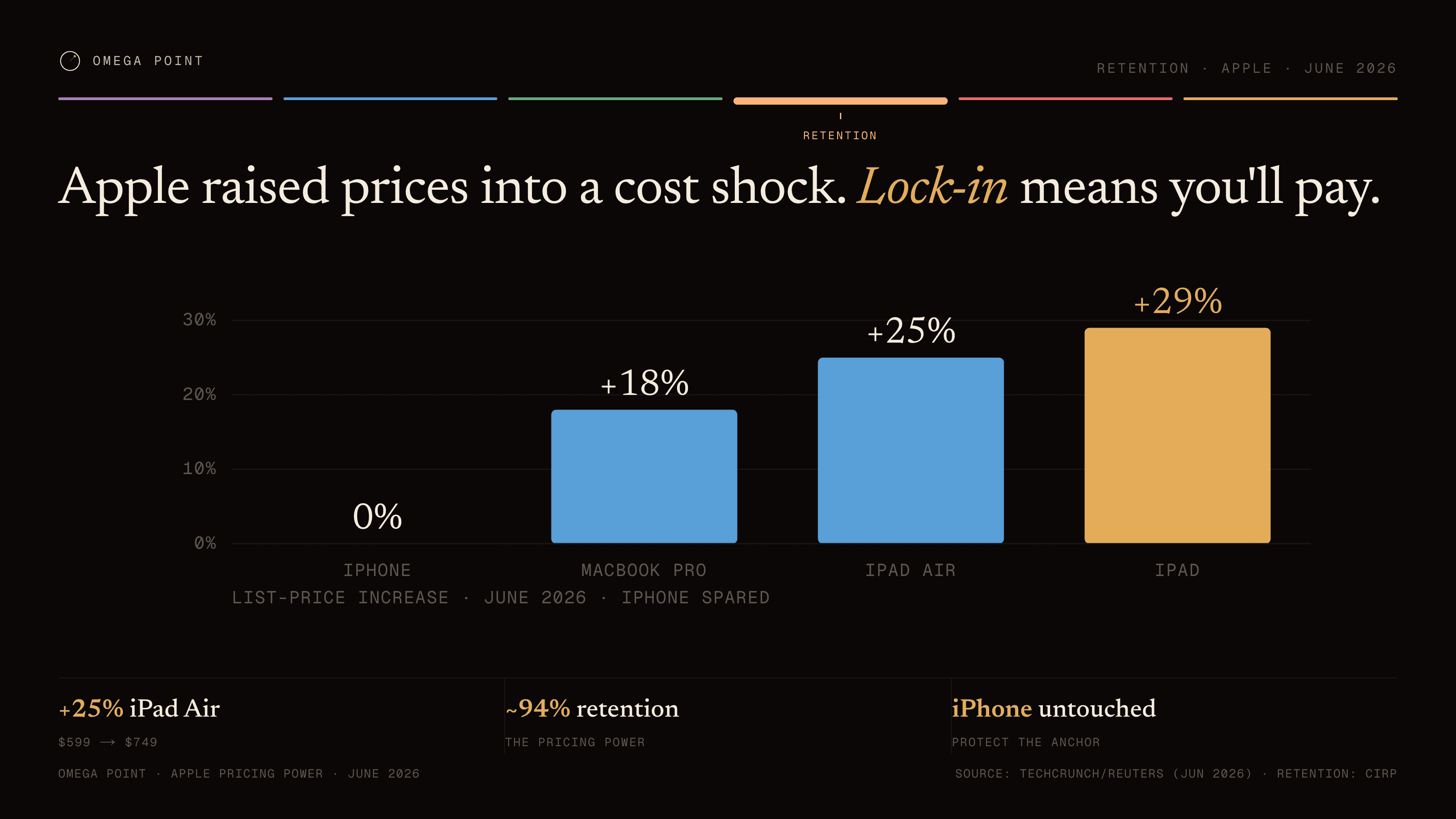
Source: TechCrunch — Apple raises Mac and iPad prices, spares iPhone (Jun 25, 2026)
Challenge
Consumer electronics is a replacement-cycle business where users consider alternatives with every upgrade. Apple needed to ensure that iPhone users didn't defect to Android, especially as competitors offered comparable features at lower prices. Each product cycle was a churn risk.
Approach
Apple's retention strategy was additive ecosystem lock-in: each Apple product made every other Apple product more valuable. iMessage created social switching costs (green bubble stigma), AirDrop made file sharing instant between Apple devices, iCloud synced data seamlessly, AirPods auto-paired with iPhones, Apple Watch required an iPhone, and services (Apple Music, Fitness+, News+, TV+) bundled via Apple One. The App Store ecosystem meant purchased apps and subscriptions were iOS-locked. Apple Health data, iCloud Photo Library, and years of iMessage history became irreplaceable switching costs. By 2023, 94% of US iPhone users planned to buy another iPhone, the highest brand loyalty in consumer electronics.
Results
- iPhone retention rate: ~94%
- Active devices (2023): 2.2B
- Services revenue (2023): $85B
- Installed base growth (5yr): +30%
- Jun 2026 device price hikes: +6–29% · iPhone spared
Sources
- Apple Investor Relations
- Apple earnings calls (Tim Cook commentary)
- CIRP loyalty research (2023)
The full record sits in the studio register.
Related
Part of the Retention growth pillar. See also Spotify Wrapped: Annual Retention Engine, Amazon Prime's Benefit-Stacking Retention Moat, Duolingo's Streak System as Retention Machine.